
Are Gutter Guards Worth It in Cincinnati, Ohio? An Honest Breakdown
Every fall, Cincinnati, Ohio homeowners face the same problem. Leaves fill the gutters, water backs up, and the ladder comes out again. It’s a chore nobody loves — and one that can cause real damage if it gets skipped.
That’s why gutter guards sound so appealing. Put them on once, and forget about cleaning forever. But is that really true? And are gutter guards worth it for your Cincinnati home?
In this guide, we’ll give you an honest look at what gutter guards can and can’t do. We’ll cover the types available, what they cost, and how Cincinnati’s weather affects their performance. By the end, you’ll know exactly whether gutter guards make sense for your home. If you’d like to talk through your options with a local expert, our gutter services team is always ready to help.
What Are Gutter Guards and How Do They Work?
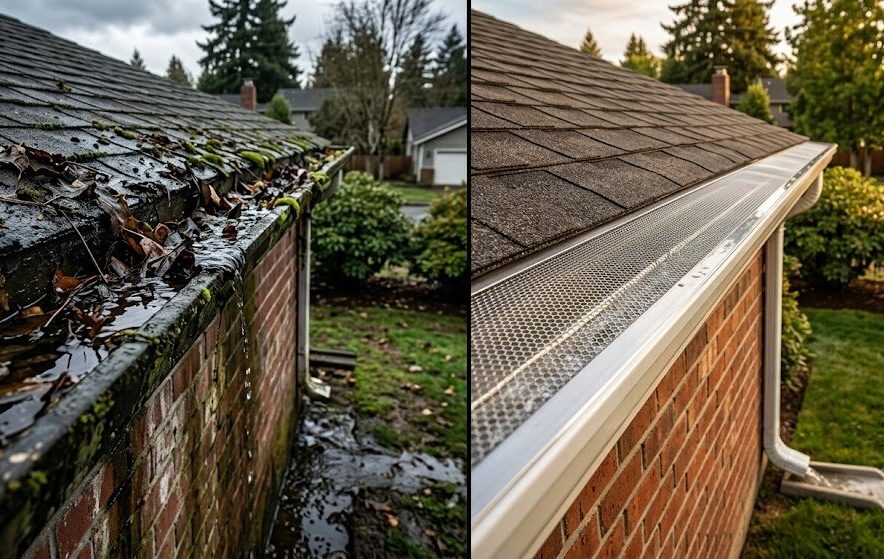
Gutter guards are covers or filters that sit on top of your gutters. Their job is to let rainwater in while keeping leaves, twigs, and other debris out. The idea is simple: clean gutters, less maintenance, fewer problems.
However, not all gutter guards are the same. There are several types, and each one works a little differently.
The Main Types of Gutter Guards
Here’s a quick look at the most common options Cincinnati homeowners choose:
- Mesh screens — Fine metal screens that filter out even small debris. These are the most effective type for wooded neighborhoods.
- Reverse curve guards — Water flows around a curved surface and into the gutter. Works well in lighter debris conditions.
- Foam inserts — Foam sits inside the gutter and lets water seep through. Easy to install, but can trap debris on top.
- Brush inserts — Bristles catch water while blocking large debris. Similar to foam in how they work.
- Surface tension helmets — Water clings to a solid cover and drips in. Good in heavy rain but can overflow in Cincinnati’s severe storms.
Each type has trade-offs. Mesh guards tend to perform best in areas with heavy tree coverage, which describes many Cincinnati, Ohio neighborhoods.
Do Gutter Guards Actually Keep Gutters Clean?
This is the big question — and the honest answer is: mostly, yes. But not completely.
Good gutter guards dramatically reduce how often you need to clean your gutters. Instead of cleaning two or three times a year, you may only need to clear them once every few years. That’s a big improvement.
However, no gutter guard blocks 100% of debris 100% of the time. Small seeds, pine needles, and shingle granules can still sneak through some designs. And if debris builds up on top of the guards, it can eventually block water flow just like clogged gutters would.
That’s why professional installation matters. A poorly fitted guard leaves gaps where debris gets in — and water gets out. EkoRoofers has served the Greater Cincinnati area for over 30 years, and proper fitting is something we take seriously on every job.

How Cincinnati, Ohio Weather Affects Gutter Guard Performance
Fall Leaves Are the Biggest Challenge
Cincinnati, Ohio gets a heavy dose of fall foliage every year. Maples, oaks, and sycamores drop massive amounts of leaves from October through December. For homeowners without gutter guards, this means multiple cleaning sessions during those months alone.
Gutter guards — especially micro-mesh designs — handle leaf debris well. Because of this, they’re particularly worth considering for Cincinnati homes surrounded by mature trees.
Winter Ice and Freeze-Thaw Cycles
Cincinnati winters bring freeze-thaw cycles that can be rough on gutters. When water gets trapped in gutters and freezes, it expands. This puts stress on gutter joints and can cause gutters to pull away from the fascia board.
Ice dams — sheets of ice that form at the roof’s edge — are another concern. Some gutter guard designs can actually make ice dams worse by trapping standing water. For this reason, choosing the right guard style for Cincinnati’s climate matters. Our gutter installation specialists can recommend the best fit for your home.
Summer Storms and Heavy Rainfall
Cincinnati summers bring heavy downpours. Some surface tension gutter guards struggle in high-volume rain — water can overshoot the guard and pour straight over the edge. Mesh-style guards typically handle heavy rain better because water passes through rather than around them.
How Much Do Gutter Guards Cost in Cincinnati, Ohio?
Cost is one of the biggest factors homeowners weigh. Gutter guard prices vary widely based on the type and how much linear footage your home has.
Here’s a rough breakdown to give you an idea:
- Foam and brush inserts — Lowest upfront cost. DIY-friendly but often need replacing every few years.
- Screen and surface tension guards — Mid-range pricing. Balance of performance and value.
- Micro-mesh guards — Higher upfront cost but the longest lifespan and best performance in debris-heavy areas.
For most Cincinnati homeowners, professionally installed micro-mesh guards deliver the best return over time. You spend more upfront, but you spend far less on cleaning, repairs, and gutter replacement over the years.
Worried about the cost? EkoRoofers offers flexible financing options so you can protect your home without the financial stress.
5 Ways Clogged Gutters Damage Your Home
Still on the fence? Consider what happens when gutters don’t work properly. Clogged gutters aren’t just an annoyance — they cause real, expensive damage.
- Foundation damage — Overflowing gutters dump water right next to your foundation. Over time, this causes cracks and settling.
- Roof damage — Backed-up water sits on the roof’s edge, rotting the decking and fascia underneath. This can lead to costly roof repairs or even early replacement.
- Siding damage — Water cascading down the side of your home stains and warps siding, especially wood and fiber cement materials.
- Basement flooding — Poor drainage sends water toward the house instead of away from it.
- Pest problems — Standing water and damp debris in gutters attract mosquitoes, birds, and even rodents.
In fact, many homeowners only call us after one of these problems shows up. By then, what could have been a straightforward gutter upgrade has turned into a bigger repair project. Preventing the damage in the first place is always the smarter — and cheaper — move.
Gutter Guards vs. Regular Gutter Cleaning: Which Wins?
Let’s compare the two side by side.
Regular cleaning keeps your gutters clear, but it requires effort every season. You’re either climbing a ladder yourself — which carries real safety risks — or paying a service twice a year. For many Cincinnati homeowners, that cost adds up quickly over time.
Gutter guards shift that equation. The upfront investment pays off when you consider years of reduced cleaning, lower risk of damage, and less time spent on a ladder. Most quality gutter guard systems last 20 years or more with minimal attention.
That said, gutter guards are not completely maintenance-free. Plan on a quick inspection once a year to clear any debris sitting on top of the guards. But that’s a far cry from full cleanouts three times a year.
How EkoRoofers Can Help Cincinnati Homeowners
At EkoRoofers, we’ve helped Cincinnati homeowners protect their homes for over 30 years. When it comes to gutters, we don’t just sell you the cheapest option — we help you find the right one for your home, your trees, and your budget.
Our team inspects your existing gutters before recommending any guard system. If your gutters are already showing wear, we’ll let you know. Sometimes the smarter move is to replace the gutters first and install guards on a fresh system. We back all our workmanship with a 30-year warranty, so you know the job is done right.
And because we care about the environment, we use sustainable practices on every project. EkoRoofers plants 10 trees for every roof we replace — because protecting your home and protecting the planet go hand in hand.
Ready to Stop Worrying About Your Gutters?
So — are gutter guards worth it in Cincinnati, Ohio? For most homeowners, the answer is yes. They reduce maintenance, prevent damage, and pay for themselves over time. The key is choosing the right type for your specific situation and having them installed correctly.
EkoRoofers makes it easy to take the next step. Call us at 513-438-3134, email us at info@ekoroofers.com, or get your free instant quote online today. Your gutters will thank you — and so will your foundation, your roof, and your weekends.
Frequently Asked Questions
Are gutter guards really worth the money?
For most homeowners, yes — average installation runs $650 to $2,000 depending on type, materials, and home height. When you factor in fewer cleanings, less ladder risk, and reduced water damage, the upfront cost typically pays for itself within a few years.
Do gutter guards mean zero maintenance?
No — there’s no such thing as a fully maintenance-free gutter guard system, even with high-end products. You’ll still want a quick annual check to clear any debris sitting on top of the guards.
What's the best gutter guard for homes with lots of trees?
Stainless steel micro-mesh guards are generally considered the most effective and durable option for tree-heavy properties. They filter out even small debris like seeds and pine needles better than foam or brush styles.
Can gutter guards actually cause ice dams in winter?
Some solid “shield” style guards can struggle with this since they rely on water clinging to the surface, which works fine in normal rain but can overflow in heavy rain or freeze-thaw conditions. Choosing the right style for Cincinnati’s winters matters — mesh designs generally handle this better.
Should I install gutter guards myself, or hire a professional?
The most effective gutter guards need professional installation rather than a DIY approach. A poor fit leaves gaps where debris and water both get where they shouldn’t, undoing the whole point of installing them.
Do gutter guards increase my home's resale value?
They can — well-installed guards signal to buyers that the gutter system has been protected and maintained, which supports overall home value. They also help prevent the foundation, siding, and roof damage that can hurt resale appraisals down the line.