
How Long Does a Roof Replacement Take in Cincinnati, Ohio?
Your roof is leaking. Or maybe it’s just getting old. Either way, you know it’s time. But before you call a contractor, you’re probably wondering: how long will this take? That’s a fair question — and it matters a lot when you’re planning around work, kids, and your daily life.
The good news: most roof replacements in Cincinnati, Ohio take just one to three days. In fact, that’s EkoRoofers’ standard turnaround for residential jobs. However, a few things can make the timeline shorter or longer — and this guide walks you through all of them.
In this post, you’ll learn exactly what happens during a roof replacement, what can slow things down, and how to make the whole process go as smoothly as possible. Let’s get into it.
What’s the Average Roof Replacement Timeline?
For most homes in Cincinnati, Ohio, a roof replacement takes one to three days from start to finish. That’s not a guess — it’s a realistic range based on typical residential jobs.
A smaller home (under 1,500 square feet) with a simple roof shape can often be done in a single day. A larger home or one with a complex roofline may take two to three days. Either way, you won’t be living in a construction zone for weeks.
Day-by-Day Breakdown
Here’s a simple look at what usually happens:
- Day 1: Tear-off of old shingles, inspection of the roof deck, and installation of underlayment and starter strips
- Day 2: New shingles installed, flashing fitted around chimneys and vents, ridge cap applied
- Day 3 (if needed): Final details, cleanup, gutter inspection, and a full walkthrough with you
Some crews can compress this into one long day. Others split it for quality control. Both approaches work — what matters is getting it done right.
5 Things That Can Affect Your Roof Replacement Timeline
Not every roof replacement takes the same amount of time. Here are the main factors that can speed things up or slow things down.
1. The Size and Shape of Your Roof
A larger roof simply takes more time. In addition, a roof with lots of valleys, hips, dormers, or skylights requires more precise cuts and careful flashing. That adds time, but it’s time well spent — those areas are where leaks most often start.
2. The Condition of Your Roof Deck
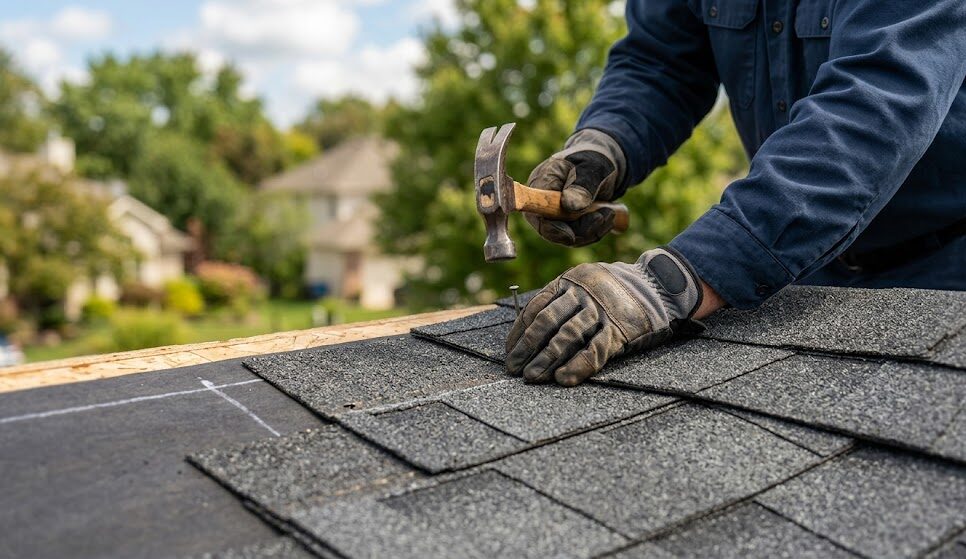
Once the old shingles are off, the crew will inspect the roof deck — the wood layer underneath. If they find soft spots, rot, or water damage, those sections need to be replaced before anything else goes on. This is good news in the long run. However, it can add a few hours or a partial day to the job.
If you’ve been putting off a roof repair for a while, there’s a higher chance of deck damage. Getting ahead of small problems early can prevent this extra step.
3. Weather in Cincinnati, Ohio
Cincinnati, Ohio weather can be unpredictable. Roofing crews need dry conditions to work safely and to ensure shingles seal properly. A rainy stretch can pause a job mid-week. Because of this, most contractors build a little flexibility into their schedule.
For the best results, late spring and early fall tend to be ideal times for roof replacement in Cincinnati, Ohio. Temperatures are mild, and rain is more predictable. That said, experienced crews can work through most conditions — they just won’t rush when safety is at stake.
4. Material Availability
Most roofing materials are ordered in advance. If a specific shingle color or style is out of stock, it can push your start date back by a few days. This is rare but worth asking about when you schedule. EkoRoofers plans ahead so delays like this don’t catch anyone off guard.
5. Permitting Requirements
Some municipalities in the Greater Cincinnati area require a permit before roofing work begins. The time to pull a permit varies — it’s usually a few days. Your contractor should handle this for you. If they don’t offer to, ask.

What Happens During a Roof Replacement? (Step by Step)
It helps to know what the crew is actually doing on your property. Here’s a simple breakdown of the process:
- Delivery of materials: Shingles, underlayment, and supplies arrive, usually the day before or morning of the job
- Tear-off: Old shingles and underlayment are removed and loaded into a dumpster or trailer
- Deck inspection and repairs: The roof deck is checked for damage and repaired if needed
- Underlayment installation: A waterproof layer goes down first to protect your home
- Flashing: Metal strips (called flashing) are fitted around chimneys, skylights, and roof edges to keep water out
- Shingle installation: New shingles are nailed down row by row, starting from the bottom
- Ridge cap: The peak of the roof gets a finished cap to seal everything in
- Cleanup: Magnetic rollers pick up nails, debris is removed, and the job site is left clean
- Final inspection: The crew walks the roof and you do a walkthrough together
From start to finish, a typical Cincinnati, Ohio home moves through all nine steps in one to three days.
How to Prepare Your Home Before the Crew Arrives t
A little prep on your end can help the day go smoothly. Here are a few simple tips:
- Clear your driveway so material deliveries and the crew have easy access
- Move cars out of the garage if debris might land on that side of the home
- Take down wall art and mirrors inside the home — the vibration from nailing can shake things loose
- Let your neighbors know so they’re not surprised by the noise and activity
- Keep pets and children away from the work area throughout the day
Most importantly: don’t stress. The crew does this every day. Your job is to stay clear and let them work.
Why EkoRoofers Gets It Done in 1–3 Days
EkoRoofers has been serving Cincinnati, Ohio homeowners for over 30 years. In that time, we’ve built a process that keeps jobs moving without cutting corners.
Our crews are experienced, our materials are pre-ordered, and our scheduling is tight. We also back every roof with a 30-year workmanship warranty, so you know the job is done right — not just done fast.
On top of that, EkoRoofers plants 10 trees for every roof we replace. So your new roof does something good for the Cincinnati community long after we leave your driveway.
Worried about the cost? We offer flexible financing options through Affirm so you can get the roof your home needs without financial stress.
We also handle gutters and siding if your home needs a full exterior refresh at the same time. Bundling work can save time and money.
Ready to Get Started? Here’s Your Next Step
Now you know what to expect. A roof replacement in Cincinnati, Ohio doesn’t have to be a weeks-long ordeal. With the right crew, it’s fast, clean, and professionally done — usually in just one to three days. EkoRoofers makes it easy to take the next step. Get a free instant quote in minutes, and our team will walk you through the entire process — timeline, materials, and all.
Call us at 513-438-3134 or get your free instant quote online. Cincinnati homeowners have trusted EkoRoofers for over 30 years — and we’re ready to help you next.
Frequently Asked Questions
How long does it take to replace a roof on a typical Cincinnati home?
Most homes take one to three days. Smaller homes with simple rooflines can be done in a single day. Larger or more complex roofs may need two to three days.
Can roofing happen in cold or rainy weather?
Light cold is fine — experienced crews work through it. Rain is the main concern because it affects shingle adhesion and crew safety. If rain is in the forecast, your contractor may reschedule that day’s work.
Will I need to leave my home during the replacement?
You don’t have to leave, but it will be noisy. Many homeowners choose to work from another location that day. Just make sure someone is available to answer questions if the crew needs access inside.
Does the roof replacement include cleanup?
Yes. A good roofing crew — like EkoRoofers — handles full cleanup as part of the job. That includes removing all old shingles, running a magnetic roller for nails, and hauling away all debris.
What if the crew finds damage under the old shingles?
The crew will stop and show you what they found before doing any additional work. Repairs to the roof deck are usually billed by the sheet of plywood replaced. It’s not common, but it does happen — especially on older roofs.
How do I know when it’s time for a full replacement instead of a repair?
Generally, if your roof is more than 20 years old, has widespread shingle damage, or has had multiple leaks in different areas, replacement is often the smarter investment. A roof repair makes sense for isolated damage on a newer roof.